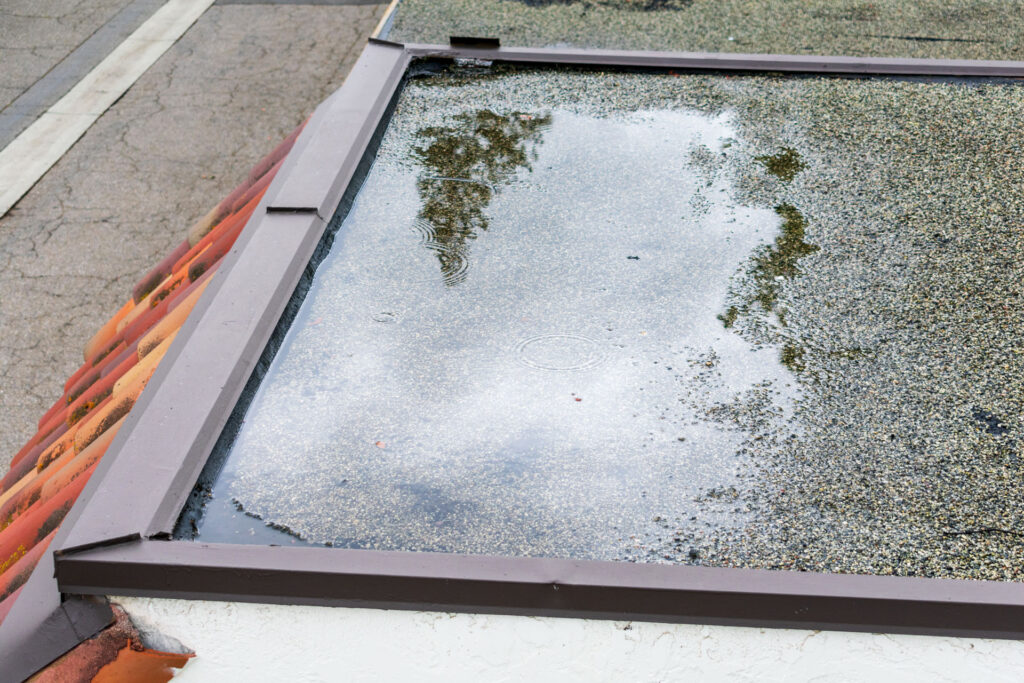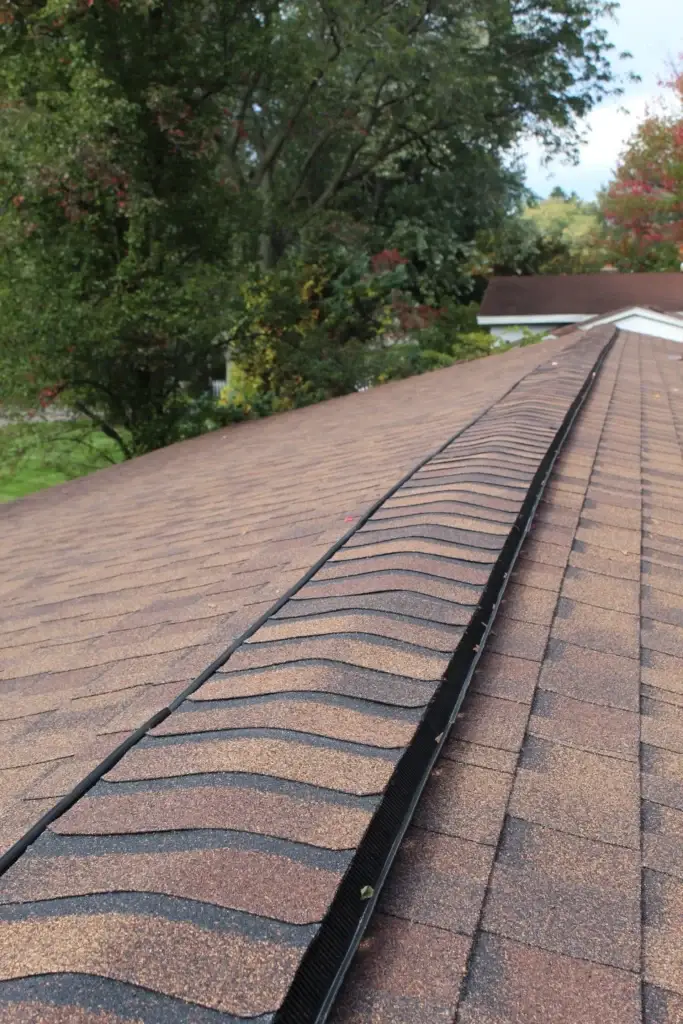
A ridge vent is a continuous exhaust vent installed along the roof ridge at the peak of a sloped roof. Ridge vents sit beneath the ridge cap shingles and allow warm air, humid air, and excess heat to escape from the attic space.
Unlike older box vents that only vent isolated sections of the roof, ridge vents run continuously along the roof’s peak to create more even airflow throughout the attic.
A complete ridge vent system requires an open slot cut into the roof peak, a protective vent cover topped with matching ridge caps, and open soffit vents down at the eaves to feed the airflow.
How Ridge Vents Actually Work
Ridge vents work because warm air rises. As warm air exits through the roof ridge vents, cooler outside air gets pulled into the attic through soffit vents and other intake vents near the lower roof edge.
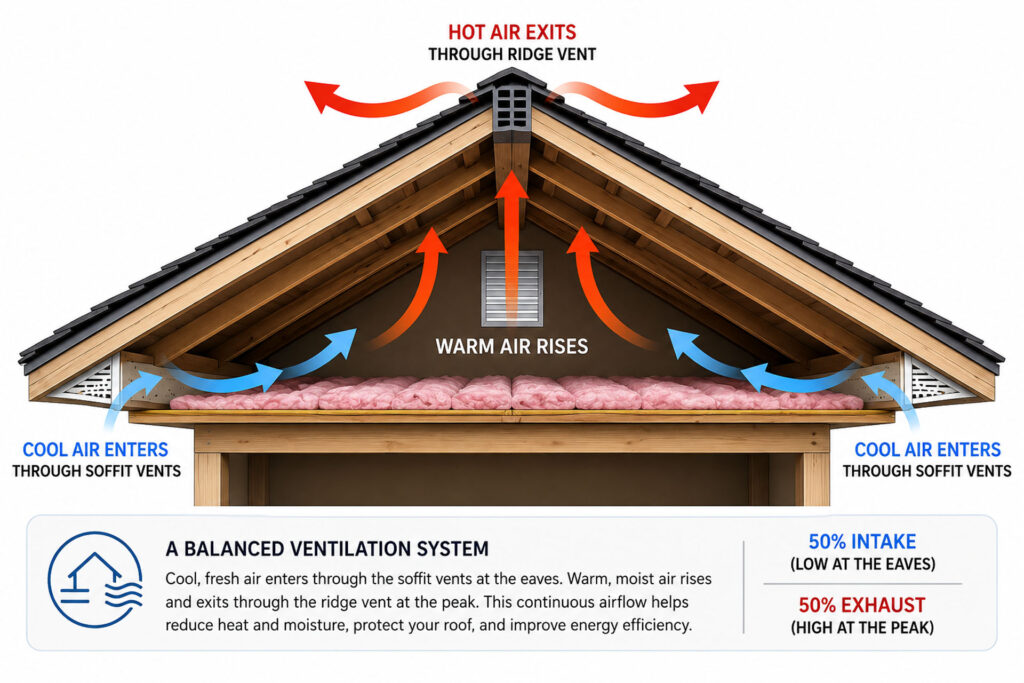
Without soffit vents and proper intake ventilation, ridge vents cannot move air properly. In some cases, a ridge vent system installed without balanced intake vents can actually reduce airflow instead of improving it.
Signs Your Attic Ventilation May Not Be Working
Most homeowners notice the symptoms of poor attic ventilation long before they ever notice the ridge vent itself.
Some of the most common warning signs include:
- Hot upstairs rooms during summer
- Ice dams forming along the roof edge in winter
- Musty attic odors or signs of mold growth
- Higher cooling costs during warm weather
- Shingles aging faster than expected
A properly ventilated attic should maintain steady airflow that allows heat and moisture to escape before they create bigger roofing system problems.
Why Proper Roof Ventilation Matters
Proper attic ventilation helps protect the entire roofing system from long-term heat and moisture damage.
During summer, excessive heat trapped inside the attic acts almost like an oven. That heat builds underneath the shingles and roof deck for months at a time, which can shorten the lifespan of roofing materials and reduce energy efficiency inside the home.
During winter, trapped warm air creates a completely different problem. Snow melts unevenly across the roof, refreezes near the colder eaves, and forms destructive ice dams that can force water underneath shingles.
Proper roof ventilation helps regulate temperature and moisture levels year-round so the attic space stays properly ventilated instead of becoming a source of heat and moisture buildup.
Ridge Vents Vs. The Alternatives
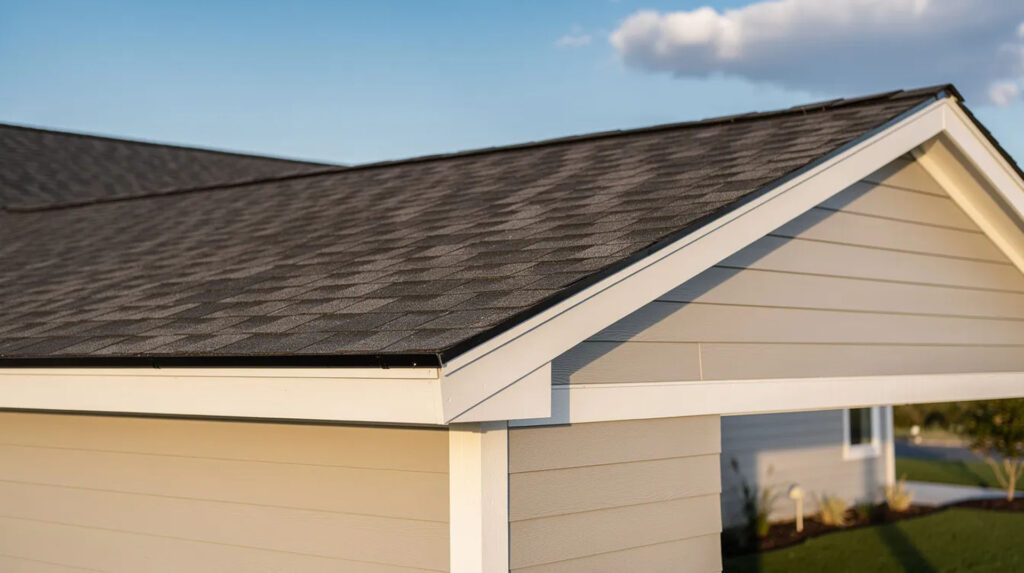
Many older homes still use box vents, turbine vents, or gable vents instead of ridge vents.
Those systems can work in certain situations, but ridge vents usually provide more consistent exhaust ventilation because they run continuously along the entire roof ridge instead of venting isolated sections.
| Ridge Vents | Box Vents |
|---|---|
| Continuous ventilation along roof peak | Vent isolated sections only |
| Blend into roofline | More visible from ground |
| More even airflow | Uneven ventilation patterns |
| Work well with soffit vents | Require multiple roof vents |
| Lower profile appearance | Larger roof penetrations |
Turbine vents rely heavily on wind movement. Gable vents depend on cross-breezes. Ridge vents rely more on natural ventilation and natural convection, which usually creates more reliable airflow year-round.
That said, ridge vents are not perfect for every roof design.
Certain cathedral ceilings, pyramid roofs, and complicated roof shapes sometimes need a different ventilation strategy. Some older homes also lack enough intake ventilation to support a properly installed ridge vent.
Problems can also happen when homeowners mix ventilation styles incorrectly. Combining ridge vents with box vents, turbine vents, or gable vents in the wrong layout can interrupt passive airflow and create competing air paths inside the attic.
That is why proper installation matters just as much as the vent type itself.
Can Rain Come In Through Ridge Vents?
A properly installed ridge vent should not allow normal rain intrusion into the attic.
Modern ridge vents are designed with vent material and internal baffles that help block wind driven rain while still allowing hot air and humid air to escape.
Roofers also install ridge caps and end caps during ridge vent installation to help protect the vent opening.
Leaks usually happen when:
- The ridge vent was not installed properly
- Cheap vent material was used
- End caps were skipped
- The roofing system already has storm damage
Like any roof component, ridge vents eventually wear down with age and weather exposure.
How Ridge Vent Installation Works
Ridge vent installation is usually completed during a roof replacement, although ridge vents can sometimes be added to an existing roofing system.
The process generally works like this:
- A roofer cuts a narrow slot near the roof ridge to create an escape path for warm air.
- Vent material is installed over the opening to allow air to escape while protecting against wind driven rain.
- Ridge cap shingles are installed over the ridge vent so the system blends into the roofline.
- The soffit vents and intake ventilation are checked to make sure the ventilation system can create proper airflow throughout the attic space.
A properly installed ridge vent should extend across most or all of the main ridgeline so the system can maintain continuous airflow throughout the attic.
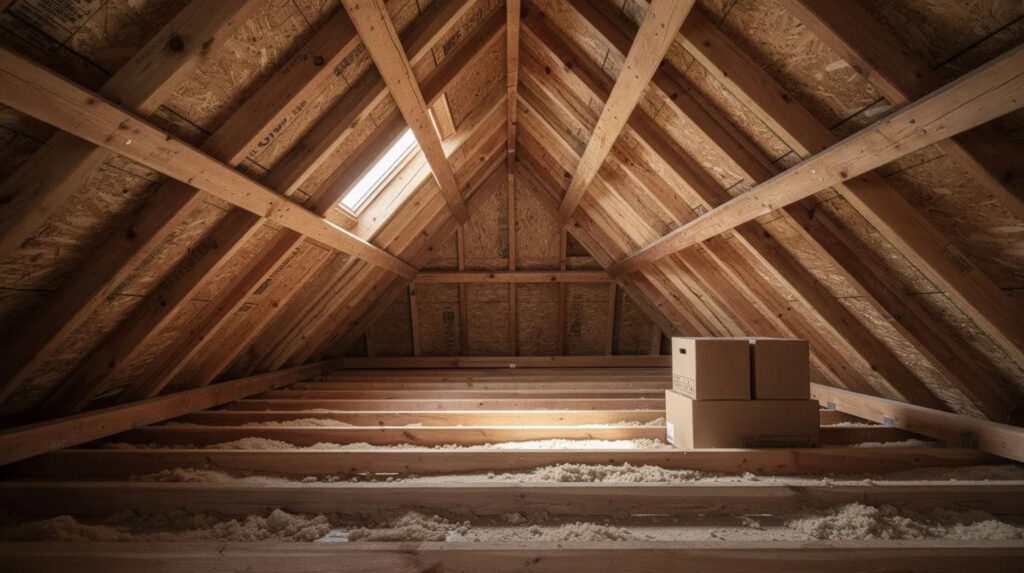
Michigan Winters, Ice Dams, And Attic Moisture
In Southeast Michigan, roof ventilation problems tend to show up hard during winter.
Our winters are not just cold. They constantly swing between freezing temperatures, heavy snow, thawing periods, and refreezing conditions.
When warm air gets trapped inside the attic space, it heats the roof unevenly. Snow melts higher up on the roof, runs downward, and then refreezes near the colder eaves.
That creates ice dams.
Once ice dams form, water can back up underneath shingles and leak into the house.
Proper attic ventilation helps prevent ice dams by keeping attic temperatures closer to the outside temperature. Ridge vents allow warm air and moist air to escape from the attic while soffit vents pull cooler air into the ventilation system.
That continuous cycle helps regulate temperature across the roof deck and reduce uneven snow melt during Michigan freeze-thaw cycles.
How Ridge Vents Help Energy Efficiency
A properly ventilated attic can also help reduce energy costs.
When excessive heat builds inside the attic during summer, the cooling system has to work harder to circulate comfortable air inside the house.
Ridge vents help release heat and moisture before the attic becomes overheated.
That can help improve energy efficiency, reduce energy bills, and maintain a more consistent temperature throughout the home during summer.
Many homeowners notice the difference most during long heat waves when attic temperatures can climb extremely high without proper ventilation.
Is A Roof Ridge Vent Necessary?
Not every house specifically requires ridge vents, but every home does need proper roof ventilation.
Today, ridge vents are one of the most common and effective ways to create proper roof ventilation on a sloped roof. Properly designed roof ridge vents satisfy most residential building code requirements when paired with proper intake ventilation.
The important thing is making sure the ventilation system is balanced correctly for the house and roof design.
How Much Does It Cost To Replace A Ridge Vent On A Roof?
The cost depends on several factors, including:
- Roof size
- Roof pitch
- Roofing materials
- Existing roof condition
- Whether the work is part of a larger roof replacement
In many cases, ridge vent replacement happens during a roof replacement because the ridge cap shingles are already being removed.
Sometimes isolated repairs are possible if the surrounding roofing system is still in good condition.
A roofing inspection is usually the best way to determine whether the issue involves the ridge vent itself or a larger attic ventilation problem.
Final Thoughts
Most homeowners rarely think about attic ventilation until problems show up inside the house or along the roofline.
But proper roof ventilation plays a major role in protecting the roofing system from heat and moisture damage year-round.
When ridge vents and soffit vents work together correctly, they create continuous airflow that helps remove warm air, humid air, and excess moisture from the attic space.
That helps improve energy efficiency, regulate temperature, reduce mold growth risks, and help prevent ice dams during Michigan winters.
If your attic feels extremely hot, your upstairs rooms stay uncomfortable, or you are seeing signs of moisture problems, it may be worth having the entire ventilation system checked instead of focusing only on the shingles.