For SE Michigan property owners managing commercial buildings in Detroit, Ann Arbor, Flint, or the surrounding suburbs, understanding what you’ll pay for a roof inspection helps you budget smartly and avoid surprises. This guide breaks down real-world pricing, explains what drives costs up or down, and shows why this relatively small expense protects your building from far larger problems.
Quick Answer: Typical Commercial Roof Inspection Cost in SE Michigan
So, how much does a commercial roof inspection cost? In Southeast Michigan, most property owners pay between $300 and $800 for buildings under 40,000 square feet, with many landing in the $450–$600 range. The typical cost for a commercial roof inspection in the United States ranges from $250 to $1,000, with most property owners spending between $400 and $600. Pricing models closely mirror local market variations and overall regional cost of living metrics, which places SE Michigan slightly above national averages.
Very small properties (under 10,000 square feet) may see quotes closer to $250–$350. Large or complex facilities exceeding 75,000–100,000 square feet, or multi-building campuses, can exceed $1,200 and sometimes reach $2,500 when advanced diagnostics are included.
The cost of a commercial roof inspection can vary significantly based on factors such as roof size, complexity, and the type of inspection method used, with advanced techniques like thermal imaging costing more than basic visual assessments.
Here’s the key perspective: commercial roof inspection cost represents a tiny fraction of roof replacement costs-often less than 1–2% of what you’d spend on a new roof. A single prevented leak or avoided emergency repair typically pays for several years of inspections.
Note: This article focuses specifically on SE Michigan businesses and property owners in Metro Detroit, Ann Arbor, Flint, Lansing suburbs, and surrounding communities where freeze-thaw cycles and regional building stock create unique inspection needs.
Key Factors That Influence Commercial Roof Inspection Cost
Several key factors determine what you’ll pay for a commercial roof inspection in SE Michigan. No two commercial roofs are identical-size, age, access difficulty, and the inspection type you choose all impact the final price.
Understanding these factors helps you compare quotes fairly instead of simply picking the lowest bid. Here’s what drives inspection costs:
- Roof size and layout complexity
- Roofing material and system type
- Accessibility, safety requirements, and building height
- Inspection type (visual, drone, infrared, moisture testing)
- Documentation depth and inspection report requirements
- Timing, seasonality, and urgency
Roof Size and Layout
Roof size is the single biggest driver of commercial roof inspection cost. A 10,000 square foot flat roof office building in Troy requires far less inspection time than an 80,000 square foot warehouse in Warren.
Roof size and complexity are significant factors affecting inspection costs, as larger and more complex roofs require more time and labor to inspect thoroughly. Roofs with multiple levels, parapet walls, and additions like loading docks take longer to evaluate than a simple open rectangle-even at identical square footage.
Complex designs with multiple elevations, specialized drainage systems, or heavy rooftop mechanical penetrations significantly extend evaluation times. Some SE Michigan contractors quote per square foot (roughly $0.05–$0.12/sq. ft.) with minimum charges applied for smaller buildings.
Roofing Material and System Type
SE Michigan commercial buildings feature various roof systems: TPO, EPDM, PVC, modified bitumen, built up roofing, and metal roofs. Different roofing materials require different inspection techniques, which can influence the overall cost of the inspection.
Single-ply membranes require checking seams and flashing integrity. Metal roofs demand evaluation of fasteners, panel movement, and corrosion. Older membranes under constant stress from freeze-thaw cycles may warrant deeper investigation due to known shrinkage patterns in cold climates.
Accessibility, Safety, and Height
Easy-access, single-story commercial roofs in suburbs like Novi or Livonia are faster and cheaper to inspect than tall downtown Detroit buildings with limited hatch access.
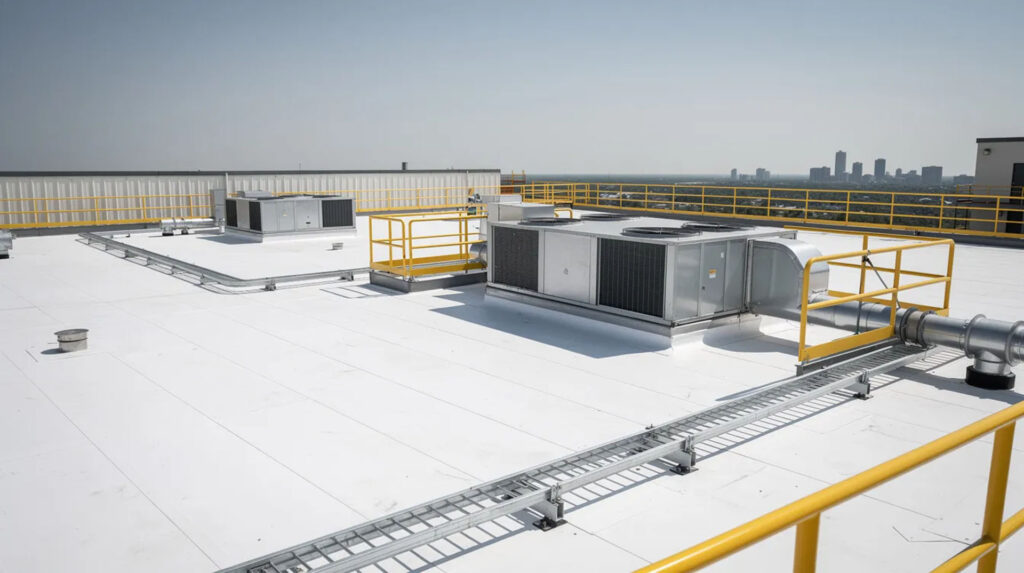
Accessibility and safety requirements can increase inspection costs, especially if the roof has limited access or requires specialized equipment for inspection. Higher buildings may need safety lines, man-lifts, and OSHA-compliant fall protection-all adding time and expense.
Winter conditions in SE Michigan (ice, snow, slippery membranes) can limit safe access, sometimes requiring return visits that increase total inspection costs.
Inspection Type and Level of Detail
The type and detail level of the inspection directly impact the cost; more advanced inspections, such as those using thermal imaging, are typically more expensive than basic visual assessments.
Common inspection types include:
- Basic visual inspection: Walk-through assessment at the lower end of pricing
- Enhanced visual with photos: Adds documentation for a modest increase
- Drone roof inspection: Valuable for hard-to-access areas or large footprints
- Infrared inspection with moisture meters: Detects trapped moisture and hidden moisture from winter freeze-thaw cycles
A visual inspection suits routine checks, while infrared scanning helps identify wet insulation invisible to the naked eye. Choose inspection type based on building value, risk tolerance, and long term savings potential-not just upfront cost.
Inspection Report Depth and Documentation Needs
A quick verbal update costs less than a detailed written report with mapped defects, annotated photos, repair priorities, and budget estimates.
Detailed reports serve specific purposes: capital planning, documenting the roof’s condition for insurance, supporting warranty compliance, and scheduling phased repairs. SE Michigan portfolio owners managing multiple locations often need standardized reports across all buildings, adding documentation time but improving decision-making.
Timing, Season, and Urgency
Most commercial roofs should be inspected at least twice a year-once before the hot season and again before the cold season, to ensure they are prepared for extreme weather conditions. In SE Michigan, that typically means scheduling in spring (March–May) and fall (September–November).
Emergency inspections after major storms (lake-effect snow, ice storms, wind events) often carry premium pricing due to priority scheduling. Maintenance agreements can stabilize pricing and eliminate urgent single-visit premiums.
Average Commercial Roof Inspection Cost Ranges in SE Michigan
Here are concrete cost ranges tailored to SE Michigan rather than generic national figures:
| Building Size | Typical Range |
|---|---|
| Under 10,000 sq. ft. | $300–$500 |
| 10,000–40,000 sq. ft. | $450–$800 |
| 40,000–100,000 sq. ft. | $800–$1,500+ |
| Multi-building portfolios | Custom pricing, often discounted per building |
Nationally, inspections run $250–$1,000 for most properties. SE Michigan falls within this range but trends slightly higher due to climate complexity and regional labor rates.
Cost by Roof Size and Property Type
For smaller commercial buildings under 10,000 square feet, inspection costs generally fall between $300 and $700, while larger facilities over 50,000 square feet can exceed $2,000, especially with advanced inspection methods.
Inspection costs can exceed $1,000 to $2,500 for large or complex industrial structures in areas like Sterling Heights, Romulus, or Dearborn. Properties with multiple penetrations-restaurants, medical facilities, data centers-typically fall at the upper end of each size bracket.
These figures assume comprehensive visual inspection with photo documentation, not just a quick walkthrough.
Impact of Inspection Type on Price
Add-on costs by inspection type:
- Basic visual only: Base pricing within each size bracket
- Visual + detailed photo report: Modest increase ($50–$150)
- Drone inspection: Additional $150–$400 depending on size and imaging needs
- Infrared or thermal imaging: Pushes costs to the top of base ranges or beyond
Drone inspections complement rather than replace walking the roof. Infrared testing proves especially valuable in SE Michigan for locating wet insulation caused by ice dams.
Worth noting: Paying more for the right inspection type often generates significant long term savings by catching problems invisible to basic visual checks.
What’s Included in a Professional Commercial Roof Inspection
Not all commercial roof inspections deliver equal value. A professional commercial roof inspection is a systematic evaluation of the entire roofing system to identify existing problems and potential vulnerabilities.
Inspectors typically evaluate the entire roofing system following a set checklist that includes visual inspections of membranes, flashings, drainage assessments, and internal inspections. The inspection process typically covers key areas such as surface evaluation, drainage and gutter assessment, flashing and penetrations, insulation and moisture detection, and structural review.
A clear scope helps you understand what you’re paying for and evaluate inspection cost versus value.
Roof Surface and Membrane Condition
Inspectors walk the roof (where safe) checking for blisters, punctures, cracks, ponding areas, and UV damage. SE Michigan’s wide temperature swings-January lows to July highs-plus snow loads accelerate membrane wear.
Different membrane types (TPO, EPDM, PVC, modified bitumen) show specific failure signs. Documenting issues with photos helps non-technical owners understand the roof’s condition and prioritize roof repairs.
Drainage Systems and Ponding Areas
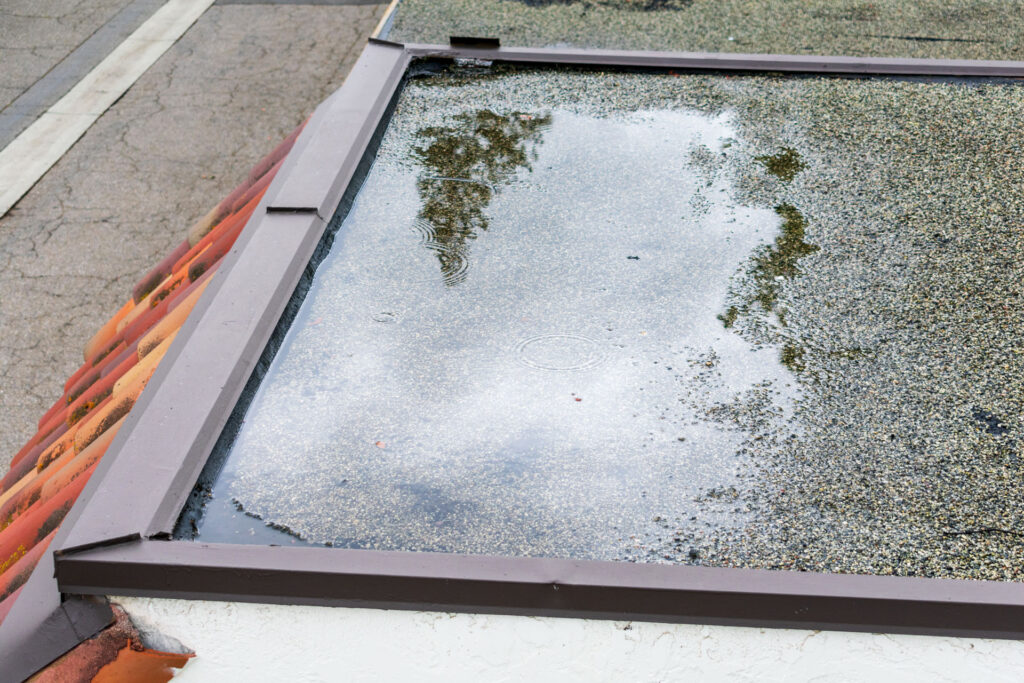
Inspectors evaluate drains, scuppers, gutters, and downspouts for blockages, damage, or inadequate slope. Standing water and ponding water create serious risks in SE Michigan because frozen water expands, damaging membranes and seams.
Blocked drains on flat commercial roofs in places like Southfield or Farmington Hills lead to interior damage, structural loading, and mold issues. Good inspection reports clearly mark chronic ponding zones with recommended fixes.
Flashings, Seams, and Penetrations
Most commercial roof leaks in SE Michigan originate at flashings, seams, and penetrations around HVAC units, vents, skylights, and parapet walls. Inspectors probe these areas for looseness, cracks, or failed sealant.
Repeated freeze-thaw cycles and winds off the Great Lakes stress these details, breaking down adhesives and fasteners. Targeted repairs at these vulnerable points cost far less than large-area membrane replacement.
Insulation, Moisture Detection, and Interior Clues
Inspectors look for soft spots or deflection indicating moisture intrusion beneath the membrane. Advanced inspections use infrared cameras or moisture meters to detect hidden moisture not visible on the surface.
Wet insulation dramatically reduces energy efficiency during SE Michigan winters and creates mold and structural risks. Interior ceiling, wall, and plenum inspections reveal staining, mold, or rust pointing to roof problems above.
The Final Inspection Report
A thorough inspection report includes annotated photographs of deficiencies, a prioritized list of recommended repairs, and an assessment of the remaining service life of the roof.
Reports should include approximate estimated costs for necessary repairs and, when possible, remaining service life projections. Detailed reports prove critical for warranty compliance, supporting insurance claims after SE Michigan storms, and capital planning.
Digital PDF reports with embedded images make tracking conditions across portfolios easier for multi-site businesses.
Drone Roof Inspection: When Does It Make Sense and How Much Does It Cost?
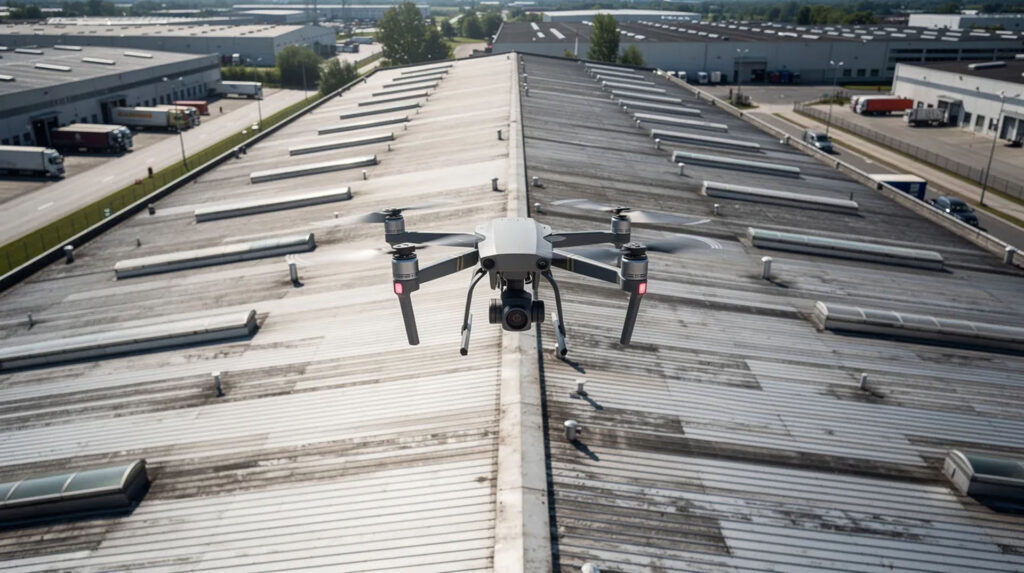
Drone roof inspection has become increasingly common for SE Michigan commercial roofs, especially where access or safety presents challenges. Drones usually supplement rather than replace traditional inspections, depending on roof type and access conditions.
Adding drone inspection typically increases costs by $150–$400 depending on roof size and imaging complexity. Drones capture high-resolution aerial imagery and video for large commercial roofs without extensive safety setups.
Benefits of Drone Inspections for Commercial Roofs
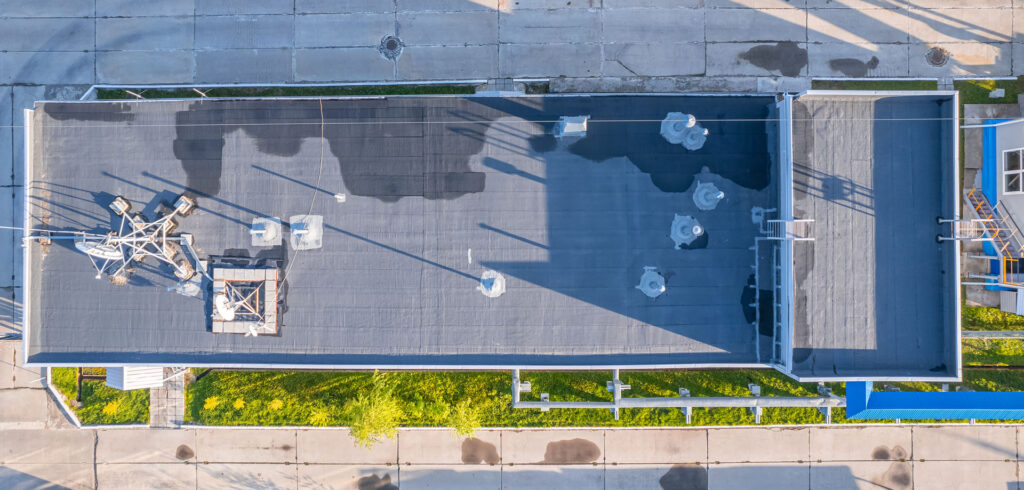
Drones provide safe access to steep sections, fragile areas, or tall buildings in downtown Detroit and older industrial zones. They quickly scan large warehouses, shopping centers, or school campuses, reducing time on site.
Aerial imagery improves documentation in the inspection report, making it easier to demonstrate the roof’s condition to ownership and insurers. Some drones pair with thermal cameras to detect temperature anomalies indicating moisture or heat loss.
Drone Inspection Cost and When to Use It
Adding drone inspection increases costs but can reduce the need for lifts, extra crew, or multiple site visits. Drones prove most valuable for:
- Limited roof access situations
- Very tall buildings
- Large footprints (50,000+ square feet)
- Roofs with many obstructions
Ask whether drone imaging is included in quoted inspection costs or billed separately. Be cautious of “drone-only” inspections where physical verification remains necessary. Ensuring roof safety helps prevent unexpected collapses or severe leaks that aerial-only assessments might miss.
How Regular Commercial Roof Inspections Create Long Term Savings
Commercial roof inspection cost is best viewed as a maintenance investment delivering measurable returns. A commercial roof should be professionally inspected at least twice a year, typically in the spring and fall, according to the National Roofing Contractors Association (NRCA). An additional inspection is recommended after any severe weather event, such as a hailstorm or high winds, to assess potential damage.
Regular inspections extend roof lifespan, reduce emergency repairs, and improve energy performance by addressing insulation and envelope issues early.
Preventing Costly Leaks and Interior Damage
A small roof leak above an office or retail space in Royal Oak can quickly damage ceilings, flooring, inventory, and equipment. Water intrusion leads to mold growth, forcing business closures, operational disruptions, and remediation costs.
Regular inspections can prevent minor issues from escalating into major problems, saving property owners significant repair costs in the long run. Catching problems early limits work to minor repairs rather than extensive tear-offs. One avoided emergency typically pays for years of routine maintenance and inspection costs-often a few hundred dollars versus tens of thousands in damage.
Extending Roof Lifespan and Deferring Replacement
A structured inspection program allows property owners to identify wear patterns and deficiencies early, which can help maintain the roof’s integrity and prolong its lifespan. Preventative maintenance through regular inspections can extend the life of a roof by 40-50%.
A well-maintained 30,000 square foot commercial roof gaining five extra years of service life translates into substantial long term savings-deferring replacement costs of $150,000 or more. Proactive maintenance guided by inspection findings (resealing seams, tightening flashings, improving drainage) extends roof lifespan significantly and improves energy efficiency.
Stronger Insurance and Warranty Outcomes
Insurance carriers increasingly expect documented routine maintenance, including commercial roof inspection records, when handling claims after hail, wind, or heavy snow. Documented inspections create a maintenance history that can be beneficial during insurance claims and policy renewals, potentially lowering premiums and improving claim outcomes.
Many manufacturer warranties require documentation of regular inspections to remain valid. Having “before and after” documentation from seasonal inspections ensures your roof meets warranty requirements and reduces disputes during claims.
How to Choose a Commercial Roof Inspector in SE Michigan
Selecting the right roofing contractor matters more than finding the absolute lowest inspection cost. Local experience with SE Michigan building codes, weather patterns, and common commercial roof systems leads to an accurate assessment.
Key criteria to evaluate:
- Licensing and insurance verification
- Commercial roofing specialization (not just residential)
- Inspection process transparency
- Quality of inspection report samples
Some contractors offer free inspections mainly as sales tools. A paid, unbiased thorough inspection with detailed documentation often provides more value than a sales-driven walkthrough.
Qualifications, Experience, and Local Knowledge
Choose inspectors with several years of hands-on commercial roofing experience in SE Michigan. Verify proper licensing, insurance, and safety training-especially important for taller buildings.
Local knowledge of typical snow loads, ice-dam issues, and regional building codes produces more reliable assessments. Ask for references from similar projects: warehouses, medical offices, schools, or retail centers.
Scope, Transparency, and Pricing Structure
Request a written scope explaining what’s included: areas covered, inspection type, and deliverables. Understand whether you’re receiving a flat fee or per-square-foot pricing to compare quotes accurately.
Reputable contractors clearly state whether drone inspections, infrared scans, and detailed inspection reports are included or priced separately. Be wary of vague free estimates that provide little documentation but push immediate replacement.
Questions to ask before scheduling:
- What areas and systems does the inspection cover?
- Is drone or infrared imaging included?
- What will the inspection report contain?
- What credentials and insurance do you carry?
- How do you handle winter access limitations?
Frequently Asked Questions About Commercial Roof Inspection Cost
Here are answers to common questions from SE Michigan business owners and property managers.
How often should a commercial roof in SE Michigan be inspected?
Professional inspections should occur at least twice yearly: spring (after snow and ice) and fall (before winter), plus after severe storms. Older roofs or mission-critical facilities may benefit from quarterly checks. This cadence balances inspection costs with long term savings by catching issues before they become emergencies.
Are commercial roof inspections ever free, and should I trust them?
Some roofing contractors advertise free inspections to generate repair or replacement work, which may bias recommendations. A paid inspection typically includes a more detailed inspection report with prioritized repairs and less sales pressure. Clarify what you’ll receive for free versus paid inspections-detailed, unbiased documentation is usually worth a fair price.
Can I perform my own roof inspection to save money?
Building staff can perform basic visual checks between professional inspections. However, DIY checks don’t substitute for having a roof professionally inspected-especially on large or complex commercial roofs. Safety concerns and the risk of missing early warning signs make professional expertise worthwhile. Combining in-house observations with scheduled professional inspections offers the best balance.
How long does a commercial roof inspection typically take?
Expect 1–2 hours for small properties, 2–4 hours for mid-size roofs, and longer for large industrial sites. Report preparation typically adds another business day or two. Inspections involving drone or infrared inspection techniques take slightly longer but produce more detailed information.
Turning Inspection Cost Into a Long-Term Asset for Your SE Michigan Property
Commercial roof inspection cost is a controllable, predictable expense protecting a major building asset. In SE Michigan’s climate, skipping inspections leads to higher total costs from leaks, energy loss, and premature commercial roof replacement.
View inspections and detailed reports as planning tools-not just compliance checkboxes. For most single-building inspections, expect $300–$800. Compare that to a single serious roof leak potentially costing $10,000–$50,000 or more in interior damage, lost inventory, and business interruption.
The math is clear: regular inspections pay for themselves many times over.
Next step: Schedule a professional commercial roof inspection with a qualified SE Michigan roofing contractor before the next season change. Add biannual inspections to your annual maintenance plan and protect your building investment for years to come.