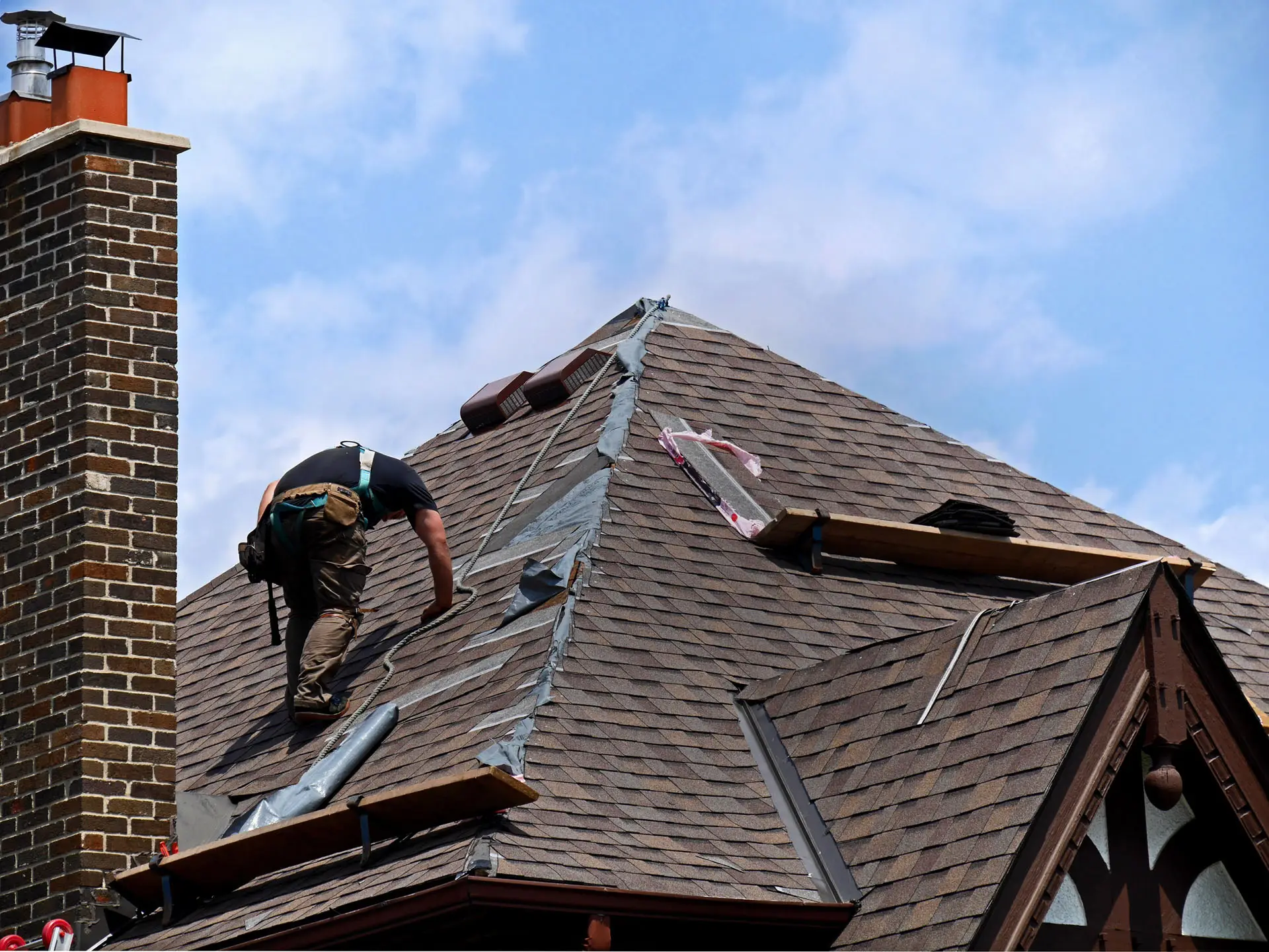
A Roof Replacement Has To Account For What’s Underneath
Once replacement becomes the practical option, we start looking at the project as a complete roofing system.
The existing roof has to come off before the roof deck can be fully assessed. That’s when deteriorated decking or other conditions that weren’t visible during the initial inspection may show up. Underlayment, flashing, ventilation, shingles, and drainage details all matter during installation.
Pitch, access, roof layout, existing materials, deck condition, flashing details, and ventilation can all change the scope of the project. We’d rather account for those things when we plan the project so the scope is clear from the beginning through completion.
A new roof can change the curb appeal of the home. We’re just as concerned with everything underneath it.
Storm Damage And Insurance Claims
After heavy wind or severe weather moves through Flat Rock, missing shingles are easy to notice.
Other storm damage can be quieter.
A lifted shingle may settle back down. Flashing can move just enough to create a problem later. Sometimes the first sign is water showing up inside well after the storm has passed.
A roof inspection helps separate actual damage from normal wear. When an insurance company is involved, inspection photos can also help document what was found without turning the roofing decision into an insurance decision.